Content marketing has become one of the most powerful growth engines for businesses today. Whether you’re running an eCommerce store, a SaaS platform, or a service-based company, high-quality content plays a critical role in attracting organic traffic, building authority, and generating leads.
However, producing consistent, high-performing content is not easy. Marketers must research topics, plan content strategies, optimize articles for SEO, distribute content across channels, and measure performance, all while keeping up with rapidly evolving AI technologies.
While many marketers rely on widely known tools such as HubSpot or Canva, there are dozens of powerful content marketing tools that remain underutilized. These platforms can significantly improve content workflows, support SEO strategies, and help businesses scale their digital marketing efforts more efficiently.
For companies working with an SEO agency in Canada or managing their own digital marketing campaigns, using the right mix of AI SEO tools and content organization tools can dramatically improve productivity and content performance.
In this guide, we explore 10 powerful content marketing tools that many marketers overlook, but that can transform how you plan, create, optimize, and distribute content.
Content Marketing Tools Comparison
Before diving deeper into each tool, the table below provides a quick overview of how these platforms fit into different parts of a modern content marketing workflow.
| Tool | Primary Use | Best For | Key Benefit |
| Jasper | AI content writing | Blog writing, marketing copy | Scalable content creation |
| Writesonic | SEO content creation | SEO articles, landing pages | Keyword-driven writing |
| Surfer SEO | Content optimization | SEO teams and agencies | Data-driven SEO recommendations |
| Notion | Content organization | Editorial planning | Workflow and collaboration |
| Descript | Audio & video editing | Podcasts, YouTube content | Text-based editing |
| CoSchedule | Content marketing system | Editorial calendars | Campaign planning |
| Buffer | Social media distribution | Social content scheduling | Multi-platform publishing |
| Lumen5 | Video creation | Repurposing blog content | Convert blogs into videos |
| OtterlyAI | AI search monitoring | LLM and AI visibility tracking | Monitor AI search mentions |
| StealthWriter | AI content humanization | AI-assisted writing | Improve readability |
This type of structured comparison table helps readers quickly understand how each tool fits into their marketing workflow and also improves the chances of appearing in Google featured snippets and AI summaries.
-
Jasper: AI Content Writing for Scalable Marketing
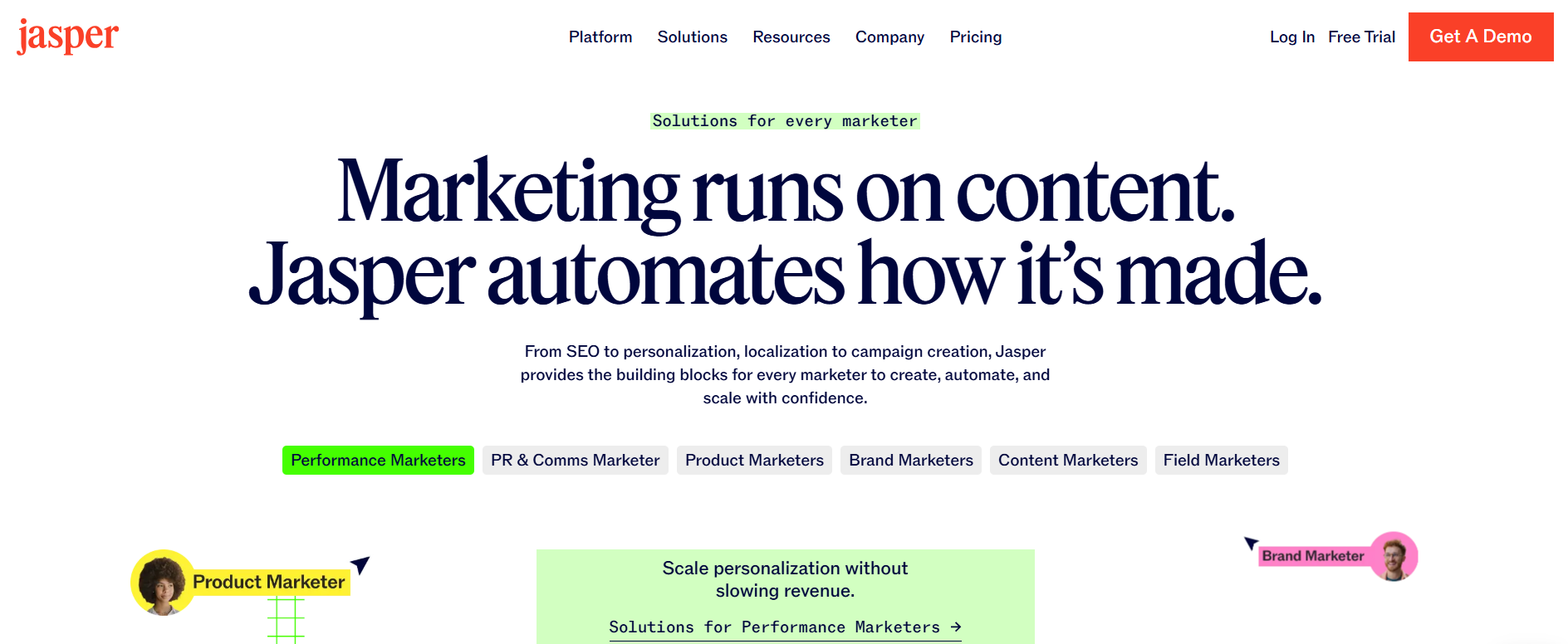
Jasper is one of the most advanced AI-powered content writing platforms designed for marketing teams that need to produce large volumes of content quickly.
Unlike basic AI writing tools, Jasper focuses heavily on marketing use cases such as blog writing, product descriptions, email campaigns, and advertising copy. The platform includes templates specifically designed to help marketers create structured content that aligns with marketing goals.
One of Jasper’s most valuable features is its ability to maintain a consistent brand voice across multiple pieces of content. Teams can define tone guidelines and messaging frameworks, ensuring that all generated content aligns with brand identity.
For companies building large content libraries or managing multiple websites, Jasper acts as a powerful content marketing system that helps streamline production workflows while maintaining quality.
-
Writesonic: AI SEO Content Creation Platform

Writesonic is another powerful AI content creation tool designed specifically for SEO-focused content strategies.
The platform offers tools for generating blog outlines, SEO articles, ad copy, and landing page content. One of its standout features is the integration of keyword optimization suggestions, making it particularly useful for marketers who want to align their content with search engine ranking factors.
Writesonic also includes tools that help marketers analyze search intent and structure content accordingly. This is especially helpful for businesses targeting competitive keywords or building authority in niche industries.
For companies working with an SEO agency in Canada, tools like Writesonic can significantly accelerate content production while ensuring that articles remain optimized for search engines.
-
Surfer SEO: Data-Driven Content Optimization

Surfer SEO has become one of the most popular AI SEO tools among professional marketers and content strategists.
The platform analyzes top-ranking pages in Google search results and provides detailed recommendations on how to structure content to compete effectively. These recommendations include keyword usage, content length, heading structure, and semantic keyword suggestions.
One of Surfer SEO’s most powerful features is its content editor, which provides real-time optimization scores as writers create content. This allows marketing teams to ensure that their articles align with current search ranking signals before publishing.
For businesses focused on organic growth, Surfer SEO is an essential tool for building content that performs well in search engines.
-
Notion: A Powerful Content Organization Tool

Notion has quickly become one of the most versatile content organization tools used by marketing teams around the world.
The platform allows teams to organize editorial calendars, manage content workflows, track article progress, and collaborate on marketing strategies—all within a single workspace.
Many content teams use Notion to build detailed content mapping tools that outline topic clusters, keyword strategies, and content pipelines. This structured approach helps marketers ensure that their content aligns with broader SEO strategies.
For agencies managing multiple clients, Notion provides a centralized environment for coordinating content production and tracking marketing initiatives.
-
Descript: AI-Powered Audio and Video Content Editing

Content marketing today goes beyond written blog posts. Video content, podcasts, and webinars have become critical components of modern digital marketing strategies.
Descript is an AI-powered editing platform that allows marketers to edit audio and video content simply by editing text transcripts. This dramatically simplifies the production of podcasts, YouTube videos, and other multimedia content.
Marketers can also repurpose long-form content into shorter clips for social media distribution, making it easier to maximize the value of each piece of content created.
For brands investing in multimedia content strategies, Descript provides a powerful solution for scaling video and audio production.
-
CoSchedule: Content Marketing System for Planning Campaigns

CoSchedule is a comprehensive content marketing system designed to help teams plan, schedule, and manage marketing campaigns.
The platform includes tools for editorial calendar management, social media scheduling, task tracking, and performance monitoring. By centralizing these functions in one platform, CoSchedule helps marketing teams stay organized and maintain consistent publishing schedules.
For content-heavy organizations, having a structured content management system like CoSchedule can significantly improve marketing efficiency.
-
Buffer: Social Media Content Distribution Tool

Buffer is a well-known social media management platform that helps marketers schedule and distribute content across multiple social channels.
Content distribution is often overlooked in content marketing strategies, but it plays a critical role in ensuring that high-quality content reaches the right audiences.
Buffer allows marketing teams to schedule posts, analyze engagement metrics, and track how content performs across different platforms.
This makes it an essential tool for businesses looking to extend the reach of their blog content through social media marketing.
-
Lumen5: AI Video Creation for Content Repurposing

Lumen5 is a video creation platform that helps marketers transform written content into engaging video content.
The tool uses AI to automatically convert blog articles into video scripts, add visual elements, and generate video clips that can be shared across social media platforms.
For content marketing teams, this makes it easy to repurpose blog posts into video formats that can attract audiences on platforms such as LinkedIn, YouTube, and Instagram.
Repurposing content in this way can significantly extend the lifespan and reach of existing content assets.
-
OtterlyAI: AI Visibility Monitoring Tool

OtterlyAI is an emerging tool designed to help businesses track how their brand and content appear within AI-powered search platforms.
With the rise of AI search engines and LLM-powered answers, traditional SEO metrics alone are no longer sufficient. OtterlyAI provides insights into how often brands appear in AI-generated responses and recommendations.
For companies focused on staying visible in AI search environments, tools like OtterlyAI can provide valuable insights into how content performs beyond traditional search engines.
-
StealthWriter: Humanizing AI Content

As AI-generated content becomes more common, many businesses face challenges in ensuring that their content feels authentic and natural.
StealthWriter is designed to refine AI-generated text so that it reads more like human-written content. The tool helps marketers maintain readability and originality while benefiting from the efficiency of AI content generation.
For teams using AI writing platforms as part of their workflow, tools like StealthWriter can help improve content quality before publishing.
Why Content Marketing Tools Matter for SEO?
Content marketing and SEO are closely connected. High-quality content helps websites rank for relevant search queries, attract organic traffic, and build authority within their industries.
Using advanced AI SEO tools allows marketers to streamline content production, identify keyword opportunities, and optimize articles for search performance.
For businesses working with an SEO agency in Canada, integrating the right tools into content workflows can significantly improve campaign results.
From planning editorial strategies to optimizing content for search engines and distributing content across channels, these tools play an essential role in modern digital marketing strategies.
A Simple Content Marketing Workflow Using These Tools

To understand how these tools work together, it helps to look at a typical content marketing workflow used by many digital marketing teams.
1. Content Strategy and Planning
The first step in any content marketing strategy is organizing topics, keyword clusters, and editorial plans. Tools such as Notion and CoSchedule are commonly used as content organization tools where marketing teams manage editorial calendars, assign tasks, and track publishing schedules.
These platforms allow businesses to structure their content marketing system and align blog topics with SEO goals.
2. SEO Research and Content Mapping
Once topics are defined, marketers analyze keyword opportunities and search intent. Tools such as Surfer SEO help identify how content should be structured to compete with top-ranking pages.
At this stage, marketers also build content mapping tools that organize articles into topic clusters and pillar pages.
This approach is often used by top content marketers to build authority around specific topics and improve organic rankings.
3. Content Creation
After keyword research and planning are complete, the content creation process begins. AI writing tools such as Jasper and Writesonic help marketing teams produce blog articles, landing pages, and marketing copy efficiently.
These tools can assist with outline generation, content drafting, and headline creation, allowing marketers to scale content production without sacrificing quality.
4. Editing and Optimization
Once the initial draft is created, editing and optimization are necessary to ensure clarity, accuracy, and SEO performance. Tools such as Grammarly and Writer.com help refine content and maintain a consistent brand voice across marketing materials.
SEO optimization tools like Surfer SEO can then be used to fine-tune the article structure and keyword usage before publishing.
5. Multimedia Content Creation
Modern content marketing increasingly involves video and audio content. Tools such as Descript allow marketers to edit podcast recordings or video content using simple text-based editing.
Similarly, Lumen5 enables marketing teams to convert written blog articles into engaging video content for platforms like LinkedIn, YouTube, or Instagram.
This allows businesses to repurpose existing content into multiple formats and reach a broader audience.
6. Content Distribution
Creating high-quality content is only part of the process. Distribution plays a critical role in ensuring that content reaches its intended audience.
Social media scheduling tools such as Buffer help marketing teams distribute content across multiple platforms and track engagement metrics.
This ensures that blog posts and marketing campaigns gain visibility beyond search engines.
7. Monitoring AI Search Visibility
With the rise of AI-powered search engines and large language models, monitoring how brands appear in AI-generated responses has become increasingly important.
Tools like OtterlyAI allow marketers to track how their brand and content appear in AI search environments, helping businesses adapt their content strategies to maintain visibility in emerging search platforms.
Key Takeaways
Content marketing is becoming increasingly complex as marketers must manage SEO optimization, content creation, multimedia production, and distribution across multiple platforms.
Using the right combination of best content creation software, content organization tools, and AI SEO tools can dramatically improve the efficiency and effectiveness of marketing teams.
For businesses working with an SEO agency in Canada or building their own internal marketing teams, adopting modern content marketing tools is essential for staying competitive in both traditional search engines and emerging AI-driven discovery platforms.
By combining strategic planning with powerful marketing tools, companies can create scalable content marketing systems that drive long-term organic growth.
 Summary